KREPE-3: NASA tests printed heat shields and flexible materials
Small capsules can turn the final descent of a cargo spacecraft into a materials experiment. NASA’s 9 October 2026 report describes how KREPE-3 will connect new heat-shield ideas with flight measurements.
What is being tested?
NASA describes twelve experimental KREPE-3 capsules carried in a Cygnus cargo spacecraft. After the carrier breaks apart during planned atmospheric reentry, the probes are designed to gather measurements and transmit them by satellite. The announced payload includes a 3D-printed heat shield and several other thermal-protection materials and shapes. The report describes the experiment; it does not publish final results for every candidate. [1]
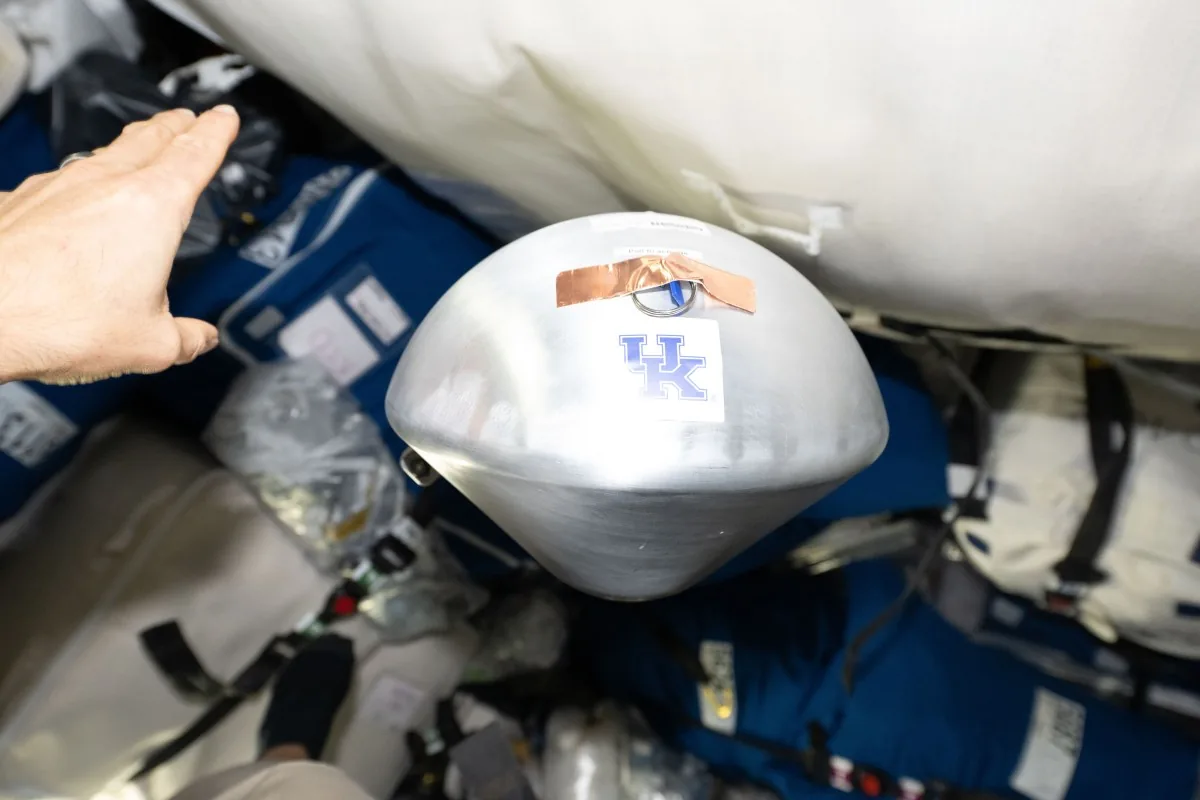
What does a heat shield do?
A thermal protection system limits the heat reaching the spacecraft structure and its contents during entry. One approach uses an ablator: material changes and is consumed as it manages incoming heat. That controlled response can include charring and release of gases. It is different from expecting an ordinary cover to stay completely unchanged. [4]
NASA’s work on HEEET illustrates that protection is designed for particular entry conditions. A material suitable for one destination or trajectory is not automatically suitable for another. The heat input, pressure, duration and vehicle geometry all matter. “Heat resistant” is therefore the beginning of a description, rather than a complete qualification. [5]
Why use a cargo vehicle’s final journey?
The capsules provide a way to collect flight evidence while sharing a journey that is already taking place. Their value comes from instrumented exposure: sensors record what happened as the environment changes. Those measurements can test a model’s predictions and help identify where a material behaved differently from expectations. A photograph of a capsule cannot supply that history.
There is a useful precedent, rather than a guarantee. NASA reported that five KREPE-2 capsules entered the atmosphere in July 2024 and returned temperature and flight measurements for analysis. That earlier mission shows why the programme collects both material and motion data. Its outcome belongs to KREPE-2, not automatically to the new KREPE-3 designs. [3]
What changes with flexible protection?
NASA’s technology description explains MERINO as a family of flexible, felt-like carbon and phenolic fibre materials. Intermingling the fibres offers a way to create a protective blanket and simplify installation compared with some rigid tile arrangements. This is a manufacturing and integration idea as well as a materials idea; flexibility alone does not tell us its performance in a given entry environment. [2]
Similarly, 3D printing describes a fabrication route. It may allow researchers to explore how a protective component is made, but the method’s name does not prove that the printed part is lighter, cheaper or more protective in every use. Those claims need a defined comparison and measurements.
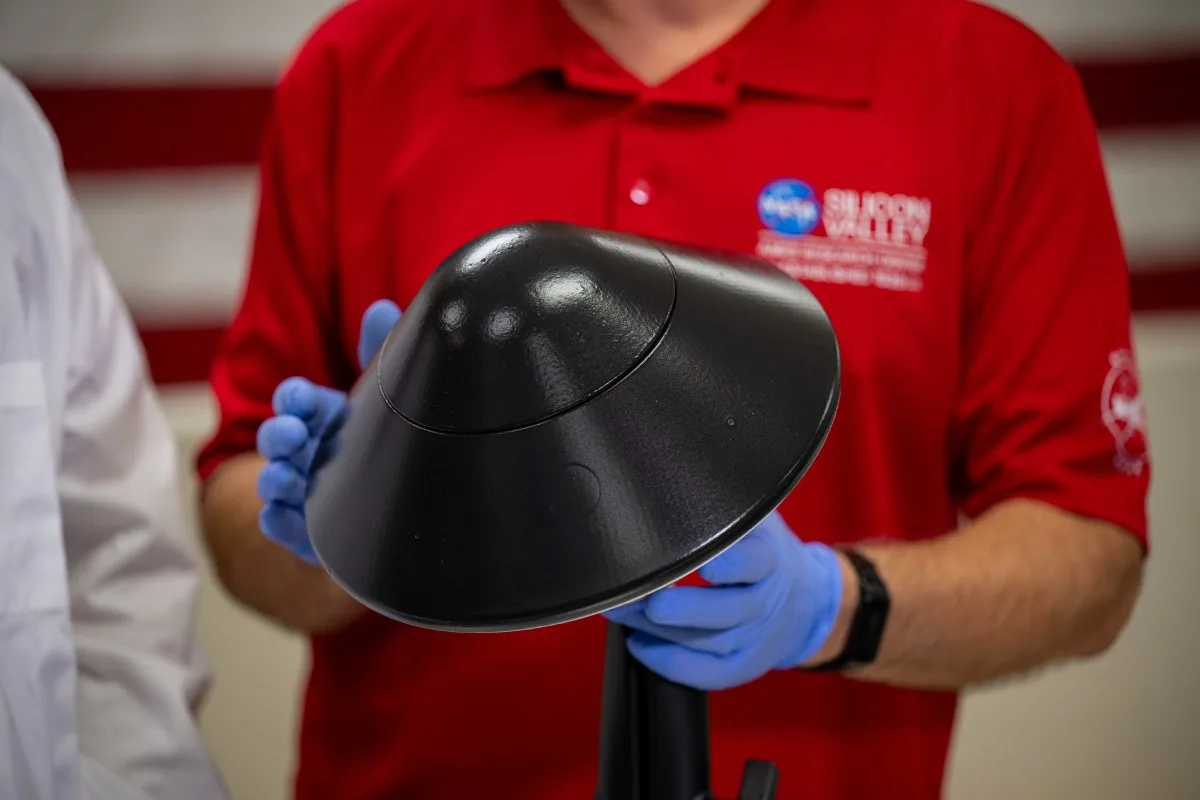
How flight data become a design decision
Imagine two candidate shields exposed to different entry histories. A lower internal temperature in one would not, by itself, prove that its material was superior: it may have encountered less heating or a different orientation. Meaningful evaluation connects the material response to the measured environment, geometry and instrumentation. This is why sensor placement and the flight record matter.
The next useful report would identify which capsules transmitted data, the conditions they encountered, and how measured behaviour compared with predictions. Scaling to a larger vehicle also requires evaluating attachments, seams and the complete protection system. An experimental flight supplies evidence for that work; certification for a particular mission is a further decision.
Questions readers ask
Did KREPE-3 already prove that printed shields are better?
The 9 October announcement describes the tests and intended measurements. It provides no final comparative result supporting that general claim.
Is a flexible shield the same as a deployable shield?
Flexibility describes a material’s ability to bend. Deployability describes a structure that can unfold or expand into its operating shape. They are different design features and require their own evaluation.
Why should a reader care about such small probes?
They can help connect computer predictions and material experiments to actual flight exposure. The educational value is the chain from measured conditions to engineering decisions, even before a full-size spacecraft uses the design.